All resources

Health & Well-being

You are viewing resources for Service Providers
Switch to Newcomers →
5 resources
Mental External Link

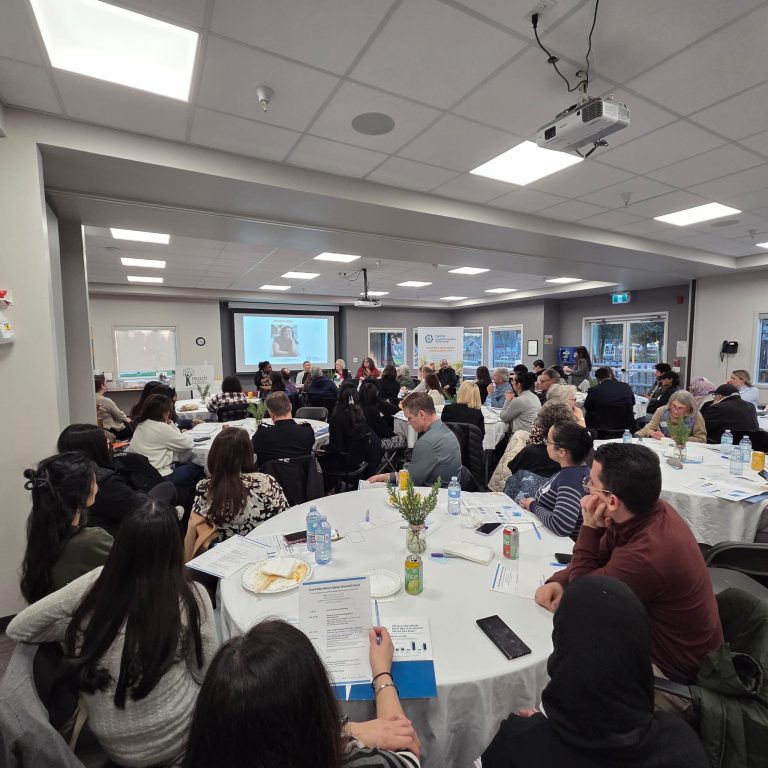
Building Mental Health Capacity: Tools for Frontline Workers Supporting Refugee Claimants Module 2: Boundary Setting within Ethnocultural Communities

Many frontline workers serve clients from their own communities, creating unique tensions around privacy, expectations, and emotional labour. To address this concern, AMSSA and BC Refugee Hub have partnered to create this e-learning module on boundary setting within ethnocultural communities. By the end of this module, learners will gain: Understanding of how to navigate dual relationships and role confusion Skills in setting and holding compassionate boundaries Scripts and strategies for saying no without guilt
Visit site
Mental External Link

Building Mental Health Capacity: Tools for Frontline Workers Supporting Refugee Claimants Module 3: Creating Safer Spaces and Responding to Disclosures

In response to ongoing interest from service providers in building skills to know what to do or say when someone shares a traumatic experience, without causing harm or overstepping their role, AMSSA and BC Refugee Hub have partnered to create this e-learning module on safer spaces and responding to disclosures. By the end of this module, learners will know: What makes a space psychologically safe (and what gets in the way) How to respond to disclosures of violence or trauma with empathy and containment Best practices in referrals, limits of confidentiality, and trauma-informed care.
Visit site
Mental External Link

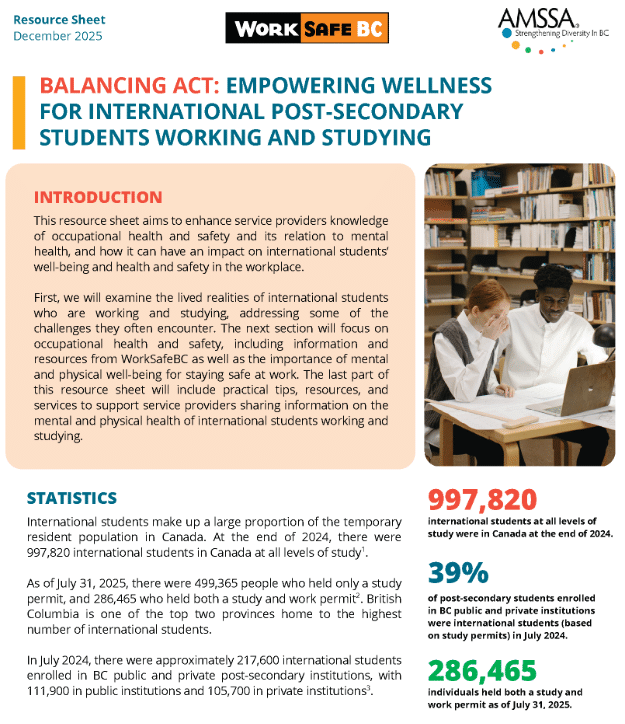
Balancing Act: Empowering Wellness for International Post-Secondary Students Working and Studying

International students who are working and studying are often overburdened by the pressures of managing multiple responsibilities, while finding time for rest and balance between these various roles. When it comes to matters of health and safety in the workplace, students may not have adequate time to learn about what to do in more complex situations such as reporting an injury or refusing unsafe work. As such, this resource sheet aims to enhance service providers and educational institutions’ capacity to better support the wellness and workplace health and safety of international students, with WorkSafeBC resources that provide information on fatigue in the workplace, rights and responsibilities as it relates to workplace health and safety, and how-to guides that outline key occupational health and safety information.
Visit site
Mental External Link

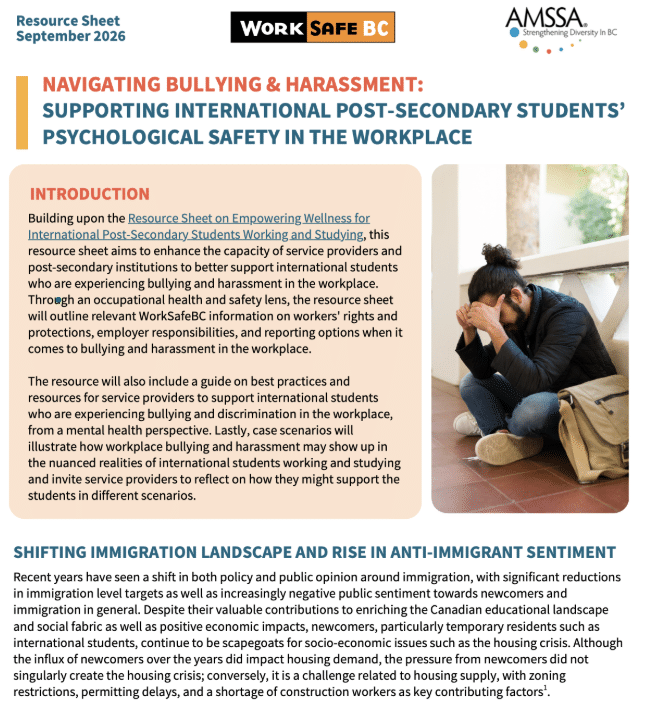
Navigating Bullying and Harassment: Supporting International Post-Secondary Students with Psychological Safety in the Workplace

This resource sheet aims to enhance the capacity of service providers and post-secondary institutions to better support international students who are experiencing bullying and harassment in the workplace. Through an occupational health and safety lens, the resource sheet will outline relevant WorkSafeBC information on workers’ rights and protections, employer responsibilities, and reporting options when it comes to bullying and harassment in the workplace.
Visit site
Mental External Link

Building Mental Health Capacity: Tools for Frontline Workers Supporting Refugee Claimants – Module 4

Responding to a need for support in handling intense emotional situations – whether from clients in crisis or staff burnout in addressing conflict – this e-learning provides staff with essential tools for defusing conflict. Through videos and case studies, this course covers the following topics with care: Recognizing early warning signs of escalation (in others and self) Verbal and non-verbal tools for calming tense situations Preventative strategies and organizational approaches to reducing conflict This e-learning is recommended for front-line staff and managers to build skills and scripts for responding to escalation in self, clients, and colleagues.
Visit site